
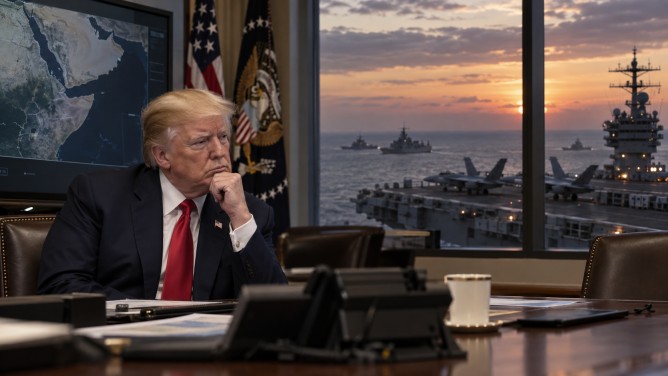
The ongoing uncertainty over potential U.S. military action against Iran-backed Houthi targets in Yemen underscores the complex geopolitical dynamics at play, as well as the potential strain on American military resources. The decision by President Donald Trump to hold off on airstrikes, despite preparations being in place, reflects broader concerns about escalating U.S. involvement in the region.
The possibility of military intervention was initially raised following pressure from Saudi Arabia, which has faced increased attacks from Houthi forces targeting its interests. President Trump, after discussions with Saudi Crown Prince Mohammed bin Salman, had asked the Pentagon to prepare for possible airstrikes. However, by the end of the weekend, the administration opted to temporarily delay any military action.
U.S. military forces had reportedly progressed significantly in their preparations, with approved target lists and warplanes ready for deployment. Despite this, officials within the administration expressed concerns about the implications of opening another military front, especially as the U.S. remains deeply involved in broader conflicts involving Iran.
The conflict in Yemen, where Houthis have been engaged in a prolonged battle against the internationally recognized government backed by Saudi Arabia, has seen a recent surge in hostilities. This escalation has raised alarms about the potential impact on regional security, particularly around the strategic Red Sea and Bab al-Mandab Strait, which are vital for global energy supplies.
As discussions continue, questions linger about the effectiveness of airstrikes in achieving a lasting resolution with the Houthis, considering past U.S. military operations did not yield significant changes in the group’s stance. The administration’s cautious approach reflects a strategic consideration of both military capacity and the potential diplomatic fallout of further intervention in the region.