
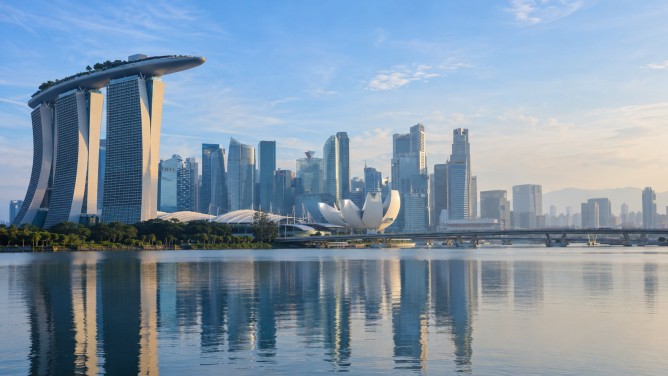
Singapore’s air quality has significantly improved, moving into the good-to-moderate range on October 22, after enduring 18 consecutive days of unhealthy conditions due to haze. As of 3 p.m., the 24-hour Pollutant Standards Index (PSI) recorded values between 71 and 99 across the island, allowing residents to safely resume outdoor activities.
The western region of Singapore was the last to transition out of the unhealthy category, with its PSI dropping from 101 to 99. This shift marks the end of the unhealthy air quality that began on October 5, when PSI readings first exceeded the threshold of 101.
Throughout the island, levels of fine particulate matter, known as PM2.5, remained within normal limits, with one-hour PM2.5 readings ranging from 16 to 39 micrograms per cubic meter by the afternoon.
Despite the current improvement in air quality, the haze situation in the region remains a concern. Satellite data continues to identify hotspots in Indonesia, although prevailing winds have so far directed much of the smoke away from Singapore. Neighboring areas, including parts of Peninsular Malaysia, Kalimantan, Sumatra, and western Sarawak, have experienced heavier pollution.