
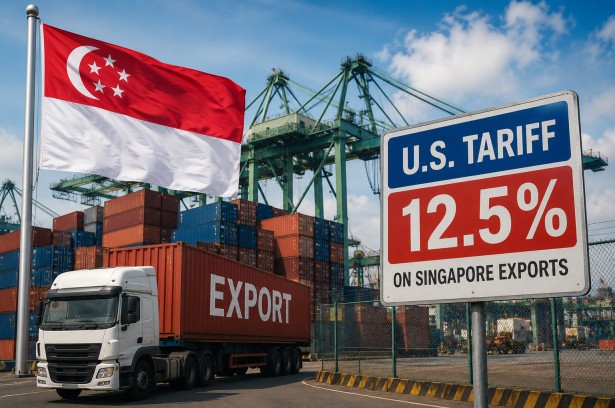
The United States has introduced a new tariff of 12.5% on roughly one-third of Singapore’s domestic exports, citing concerns related to the enforcement of forced labor laws. This move is part of a wider trade policy impacting numerous economies. In response, Singapore has refuted the U.S. allegations, asserting that it maintains a robust legal framework to combat forced labor and does not condone such practices. Singapore’s Ministry of Trade and Industry has expressed its intention to continue discussions with American trade representatives to gain clarity on the implementation of the tariff.
The new tariff, however, does not apply to several significant categories of exports. Exemptions include pharmaceuticals, semiconductors, certain electronics, aerospace products, energy products, and goods that already fall under specific U.S. sectoral tariffs. These exceptions provide some relief to Singaporean exporters in those sectors.
Despite these exemptions, business groups have voiced concerns that the tariff could generate uncertainty for manufacturers and exporters. This is particularly pressing as the United States is conducting a separate investigation that may lead to further trade measures. The potential for additional restrictions has prompted industry leaders to advise companies to diversify their export markets and bolster their supply chain resilience to mitigate potential risks.
As the situation develops, Singapore remains committed to engaging with U.S. officials to resolve the issues raised. The ongoing dialogue aims to address the concerns while preserving the strong trade relationship between the two nations. Both countries are expected to work toward a resolution that supports fair trade practices and economic cooperation.