
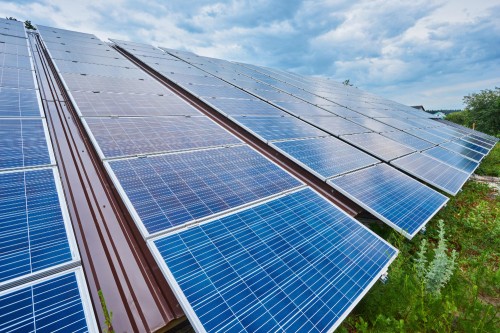
Solaren Renewable Energy Solutions Corporation, an esteemed DOE-accredited commercial and industrial solar EPC company based in the Philippines, has shed light on a significant challenge facing power-intensive businesses across Southeast Asia. The company, which boasts over 85 megawatts installed across more than 2,500 installations, has identified a gap between the installed electrical capacity and the actual usable power in real-world conditions. This discrepancy affects a range of facilities, including factories, cold storage units, food manufacturers, and other industrial sites, which often find themselves facing operational difficulties during peak demand periods despite appearing well-equipped on paper.
According to Solaren, many commercial sites report sufficient transformer ratings, generator capacities, and grid connection approvals under ideal scenarios. However, these figures often fail to account for real operating conditions such as production ramp-ups, load variations, or electrical instability. The gap between theoretical and usable capacity stems from various factors including voltage fluctuations, phase imbalances, and harmonic distortions from non-linear equipment. These issues can lead to motors drawing excess current, transformers carrying non-productive loads, and protective systems acting conservatively, all of which narrow the reliable operating window without altering the documented capacity.
This issue has financial implications as well; utilities frequently calculate demand charges based on short-duration peaks. As a result, a single spike due to uneven load distribution or a transient voltage event can set the benchmark for the entire billing cycle, causing businesses to incur costs for peak conditions they neither sustained nor fully comprehended. Solaren has observed this recurring pattern among its clientele, which includes prominent names like Toyota, Oishi, McDonald’s, and Dunkin’. While grid-tied solar installations effectively reduce energy consumption, facilities with dynamic load profiles or inadequate power factor correction continue to face demand charge exposure and equipment stress that solar systems alone cannot mitigate.
Addressing this gap, Solaren emphasizes, involves more than simply adding generation capacity. Effective solutions include power factor correction, harmonic filtering, precise load profiling, and battery storage configured for demand management. These measures help bridge the divide between what a site appears to have on paper versus what it can reliably use. Solaren’s expertise in this area is underscored by its status as a PCAB-licensed solar EPC company, headquartered in Tarlac, Philippines, with a diverse portfolio of clients across manufacturing, food service, retail, logistics, and public infrastructure sectors.
The company’s contribution to the field has been recognized with the Asian Power Award for Solar Power Project of the Year, further solidifying its reputation as a leader in tackling the challenges of renewable energy solutions in the region.
Legal Disclaimer:
The information contained in this article has been provided by independent third-party contributors, clients, or content partners. We do not independently verify the accuracy, completeness, legality, ownership, licensing, or reliability of submitted content, including text, images, videos, trademarks, or other media materials. The submitting party is solely responsible for ensuring that all content, including images and media assets, complies with applicable copyright, trademark, licensing, and intellectual property laws. We disclaim liability for any unauthorized use of copyrighted or proprietary materials by third parties. If you believe that any content published on this platform infringes your intellectual property rights, kindly contact the author above for prompt review and resolution.