
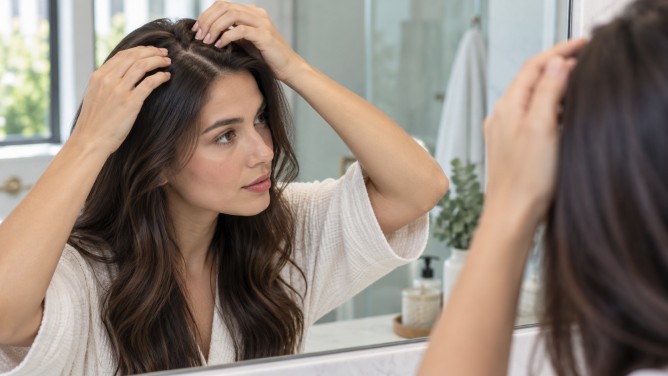
Many people may overlook their scalp when it comes to haircare, but maintaining a healthy scalp is crucial for overall hair health. Paying attention to changes in your scalp can prevent discomfort and potential hair issues. Here are several signs that your scalp might need extra care.
If you experience tightness or stinging sensations after washing your hair, it could indicate irritation or sensitivity of the scalp. This discomfort might be caused by harsh cleansing products or frequent washing. Opting for a gentler shampoo and avoiding irritating products could help alleviate these symptoms. If the problem persists, consulting a dermatologist is advisable.
Recurring flakes, often mistaken for a dirty scalp, can be a sign of conditions like seborrhoeic dermatitis rather than infrequent washing. Redness, itching, or greasy patches accompanying flakes may require a specialized anti-dandruff shampoo or medical assessment if symptoms are severe.
An oily scalp isn’t necessarily unhealthy, as natural oil, or sebum, protects the scalp and hair. However, if your roots become greasy quickly after washing, it might be worth reviewing your cleansing routine. Choosing products suitable for your scalp type and avoiding excessive scrubbing can help manage oiliness.
A heavy or coated feeling around the roots, even after washing, might result from styling product buildup or insufficient rinsing. Moderating the use of styling products and ensuring thorough rinsing of shampoos and conditioners can prevent this sensation. Persistent issues, especially if accompanied by itching or redness, may need further evaluation.
Noticeable changes in hair shedding, such as a widening hair part or visible thinning, could signal underlying issues. While some hair loss is normal, factors such as stress, hormonal changes, or medical conditions can contribute to increased shedding. Scalp inflammation may also play a role, and a dermatologist can offer appropriate guidance and treatment.
To maintain a healthy scalp, wash your hair based on its oiliness and individual needs, use gentle products, and thoroughly rinse out shampoo and styling residues. Avoid excessive scratching, and seek professional advice for persistent scalp problems. Recognizing these signs early on can help you adjust your haircare routine and keep your scalp in optimal condition.