
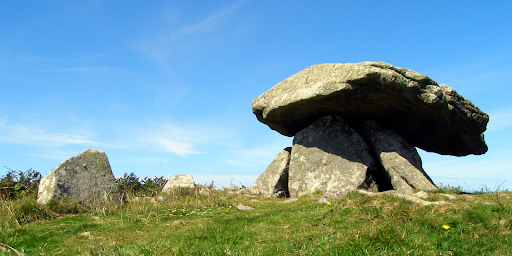
Cornwall’s winter solstice traditions represent remarkable convergence of scientific observation and mythological imagination. The same landscape that holds precisely aligned astronomical monuments also harbors folklore about pixies, demons, and supernatural beings. Rather than representing separate domains—one rational, one superstitious—these elements intertwine in ways that reveal how prehistoric communities understood their world.
The Land’s End peninsula’s western orientation created natural associations between astronomical phenomena and cosmological beliefs. The setting sun appears to descend into western seas, creating metaphors about life’s journey ending in darkness. The Isles of Scilly, positioned where the winter solstice sun sets, flickering in and out of visibility based on atmospheric conditions, reinforced beliefs about western horizons as gateways between physical and spiritual realms.
Folklore traditions persist alongside archaeological monuments. Carn Kenidjack, the rocky outcrop that dominates the moorland skyline, features in tales about the devil riding out in search of lost souls. Tregeseal’s surrounding moors are said to be frequented by pixies and demons after dark. These stories create atmospheres of supernatural presence that enhance experiential engagement with ancient sites.
Modern research reveals how such folklore may preserve genuine prehistoric beliefs. Archaeoastronomer Carolyn Kennett suggests ancient peoples viewed the Isles of Scilly as otherworldly places associated with the dead. The winter solstice, when darkness reached its maximum, may have been understood as a moment when boundaries between worlds became permeable—a concept preserved in folklore traditions about supernatural beings appearing at specific locations.
Contemporary celebrations blend these elements seamlessly. The Montol festival incorporates both folkloric and astronomical themes, with masked dancers representing supernatural beings while ritual sun burning acknowledges celestial patterns. This integration demonstrates how Cornwall’s heritage refuses neat categorization into “science” versus “superstition,” instead maintaining holistic worldviews where astronomical observation and mythological imagination reinforce each other. The result creates uniquely rich contexts for experiencing winter solstice that honor both rational understanding and imaginative engagement with mystery.
Where Folklore and Astronomy Meet in Cornwall’s Winter Landscape
30
previous post