
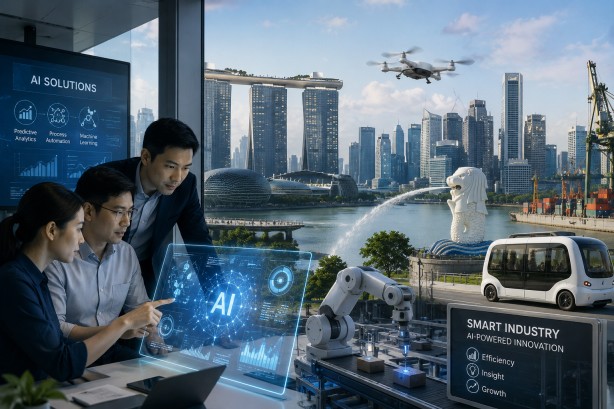
Singapore is poised to harness artificial intelligence (AI) across key sectors such as advanced manufacturing, logistics, healthcare, and connectivity, aiming to drive benefits that extend beyond these industries and contribute to broader economic growth. These four sectors collectively represent over 40% of the nation’s gross domestic product and are focal points of the government’s AI strategy set forth in Budget 2026.
Trade and Industry Minister Tan See Leng emphasized that the AI-driven transformation is expected to open new avenues for related sectors and the larger economy. However, he cautioned that the extent of these benefits hinges on the effectiveness with which companies revamp their workflows and integrate AI technologies into their operations. The minister also highlighted the necessity for Singapore to bolster its reserves of talent, capital, and expertise to nurture innovation, particularly given the country’s comparatively small population.
Echoing similar sentiments, Cambodian Minister of Industry, Science, Technology and Innovation Hem Vanndy acknowledged that AI presents both opportunities and challenges for Cambodia amid its digital transformation. He underscored the critical need for equipping businesses and workers with the skills required to adopt emerging technologies and enhance productivity.
Both ministers agreed that maintaining openness, advancing workforce development, and embracing technological adaptation are crucial as nations contend with geopolitical tensions, trade barriers, and evolving global supply chains. They highlighted the importance of preparing for these shifts to ensure sustainable progress in an increasingly interconnected world.